Will this work with the ERP and planning tools we already use?
Yes. I build on top of what you run today, for example SAP, Microsoft Dynamics or NetSuite, plus your planning spreadsheets, supplier portals and shared inbox. The workflows read from and write to those systems through their APIs or exports, so your team keeps working in familiar screens and nobody has to learn a new platform.
Will AI send messages to suppliers or change orders on its own?
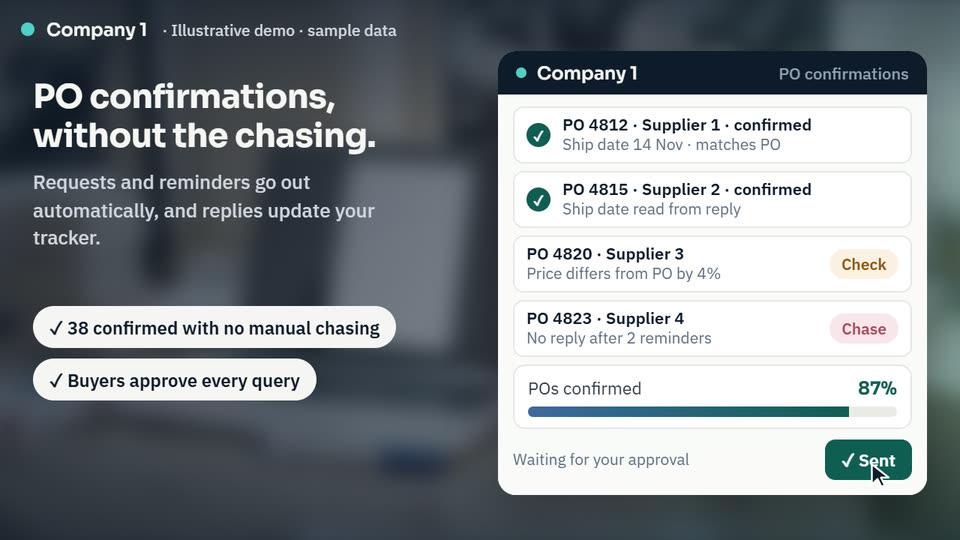
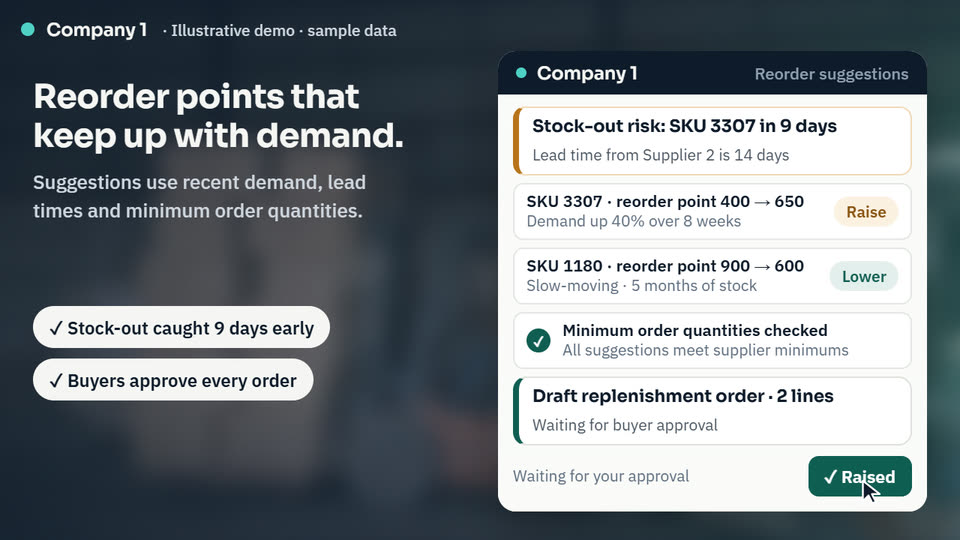
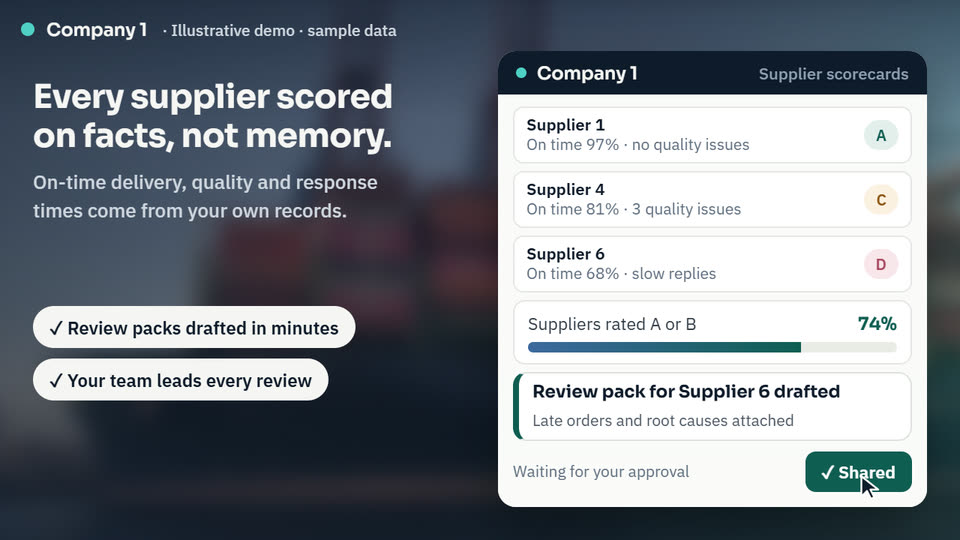
Only where you decide it should. Routine reminders, like asking a supplier to confirm a PO, can run automatically. Anything that changes a commitment, such as a new delivery date, a reorder or a message about a dispute, is prepared as a draft for approval, and a planner or buyer signs it off before anything is sent or updated.
How early can it flag a late shipment?
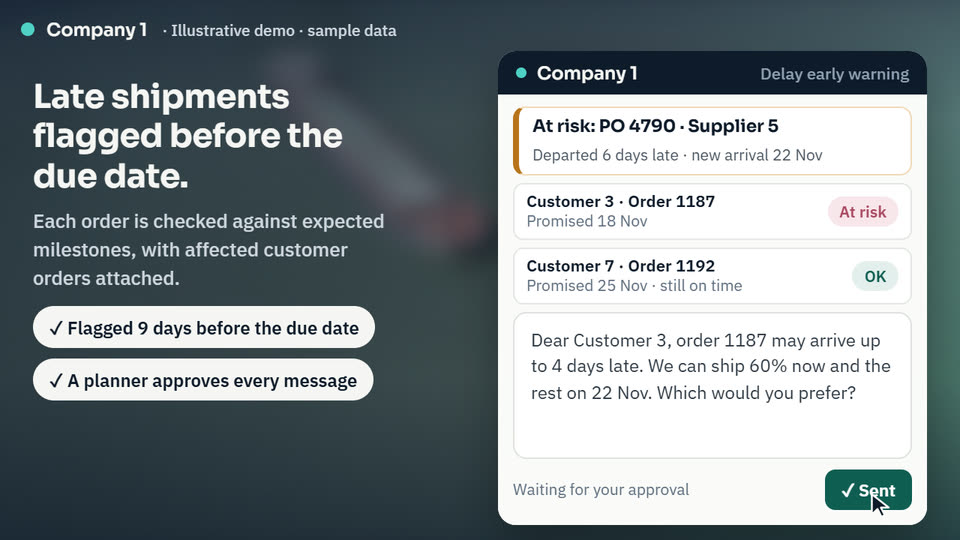
That depends on the signals you have. With supplier confirmations, carrier tracking and your own lead time history, the workflow can often flag risk days before the due date rather than on the day. It compares each order against expected milestones and alerts the right person, with the affected customer orders attached, so they can act sooner.
How is our commercial and supplier data protected?
Pricing, supplier terms and customer orders stay in systems you control. We agree access rules, data retention and where data is hosted before building, and I use AI services that do not train on your data. Each workflow gets only the permissions it needs, and every action it takes is logged so you can review it.
Do I need to be technical?
No. You need to know how your supply chain works, which you already do. I handle the set-up, connections and testing, then hand over simple instructions. Your planners and buyers use the results through email, Teams or the tools they already open each day, and I stay available for changes as your processes evolve.
How long does it take, and what does it cost?
It depends on your tools, the size of your operation and the use cases you pick. A focused first workflow, such as PO confirmation chasing, is often live within a few weeks. A short call is enough for me to give you a clear scope, timeline and price for the first step.
Where should a supply chain team start?
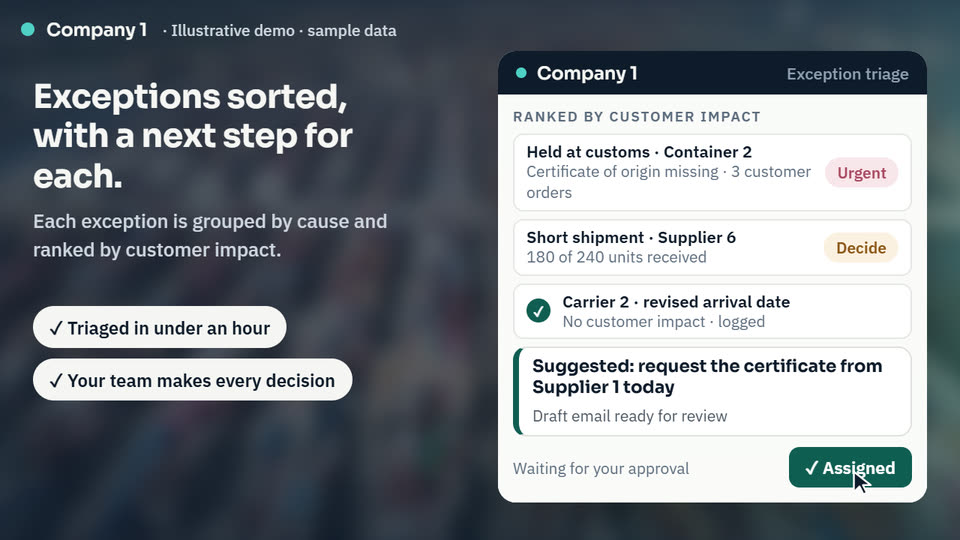
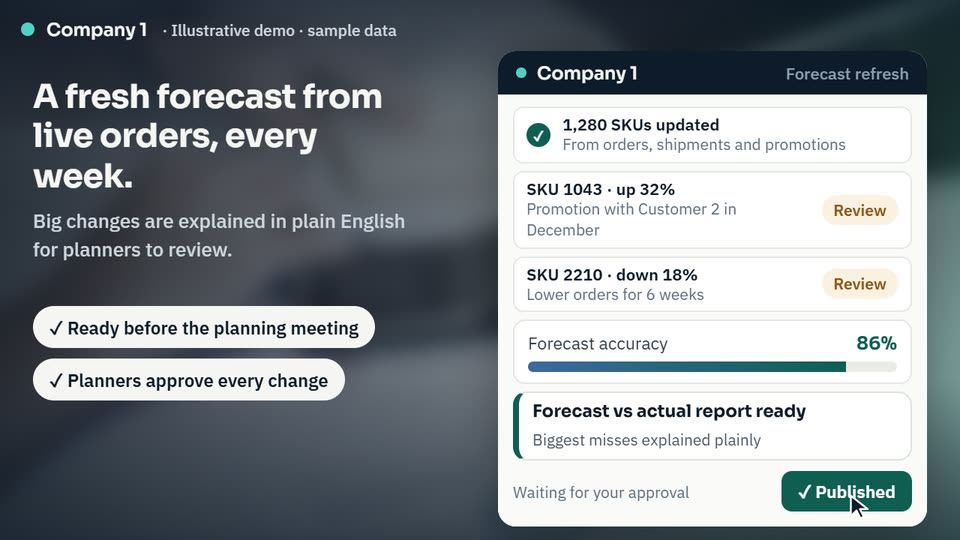
Usually with the work that takes the most hours and causes the most surprises: supplier follow-ups and late shipment alerts. They are low risk, easy to measure and build trust in the data. Once those run well, forecasting support and reorder suggestions are the natural next step.